How Much Test Coverage Is Enough Before a Product Goes to Field?
Why a headline percentage cannot prove field readiness - and how OEM teams should evaluate residual test risk instead.
Abstract
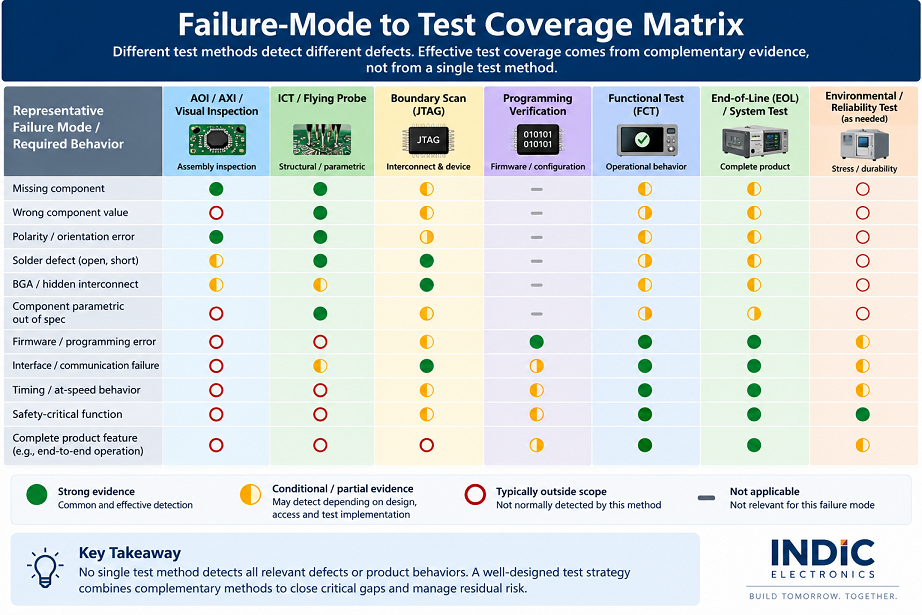
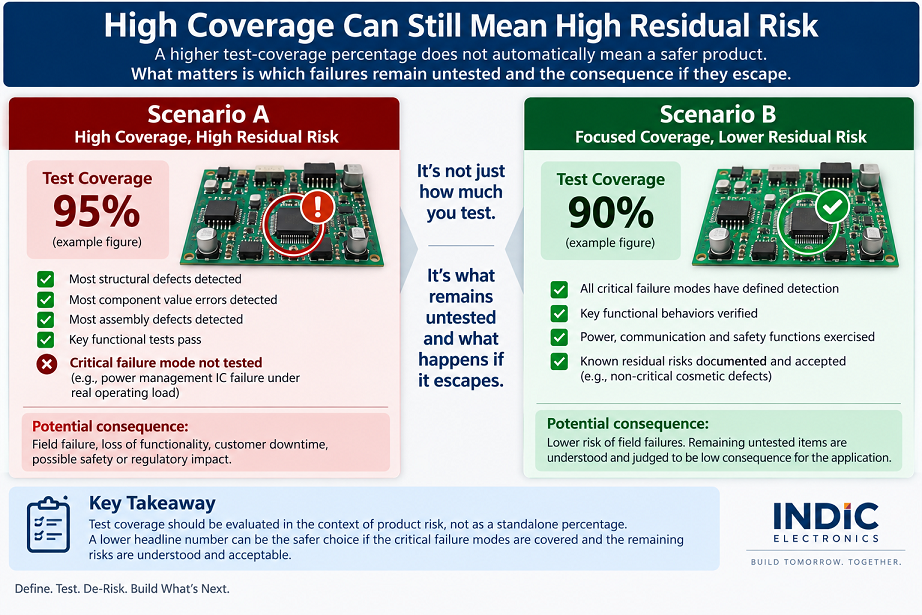
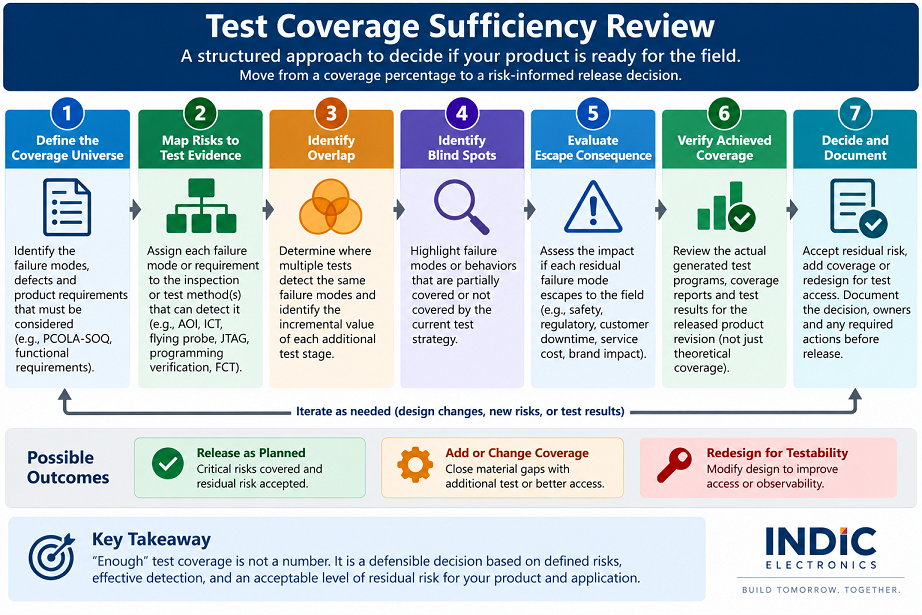
A PCBA can pass multiple production tests and still contain failure modes that matter in the field. That is why a statement such as “95% test coverage” is not, by itself, a release criterion. The percentage is only meaningful when the fault universe, denominator, detection methods, and remaining blind spots are known. This article presents a risk-based method for deciding whether production test coverage is sufficient: define credible manufacturing defects and required behaviors, map each to the evidence generated by the test strategy, identify overlap and residual gaps, and make an explicit release decision based on the consequence of what can still escape.
Executive Summary
OEM teams frequently ask a simple question before production release: How much test coverage is enough?
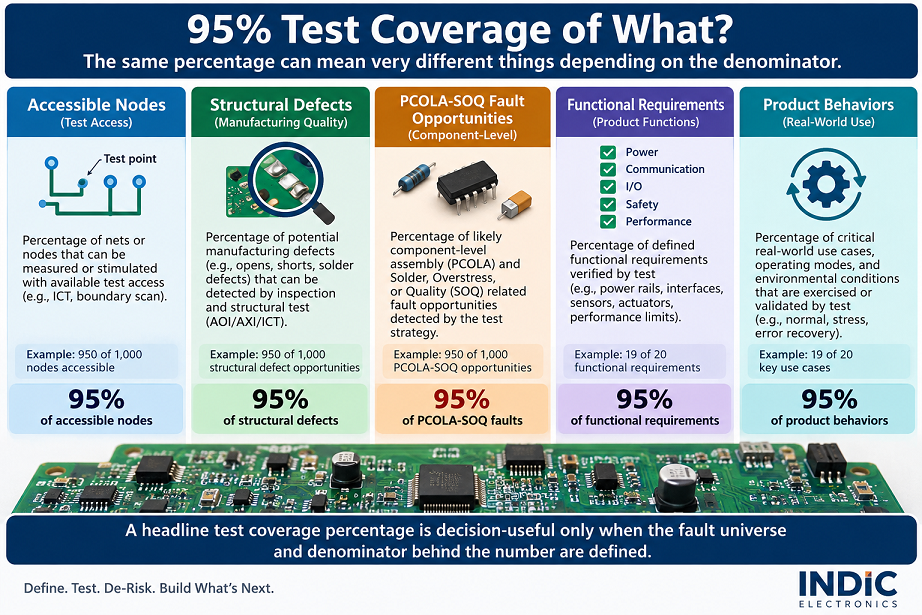
There is no universal percentage that answers it. A coverage number can refer to accessible nodes, components, structural fault opportunities, PCOLA/SOQ categories, functional requirements, or an internally defined denominator. Two programs can both claim 95% coverage and provide very different evidence.
The better engineering question is: Which credible failures can still escape, what happens if they do, and is additional test evidence justified?
A useful release review therefore considers four things together: the defined fault or requirement universe, the contribution of each inspection/test method, the residual blind spots after those methods are combined, and the consequence of the remaining risk. This approach does not replace application-specific requirements, qualification, safety testing, or regulatory obligations. It helps OEM and EMS teams determine whether the production test strategy is doing the job it was intended to do.
The Direct Answer: “Enough” Is a Residual-Risk Decision, Not a Universal Percentage
Production test coverage is sufficient when the product’s credible manufacturing defects and selected production-critical behaviors have explicit detection or evidence paths, the remaining blind spots are understood, and the residual risk is acceptable for the product and application.
That is deliberately different from saying that 90%, 95%, 98%, or any other number is “enough.” Without a defined denominator, a percentage cannot tell an OEM what has actually been proven.