Low Volume High Mix EMS
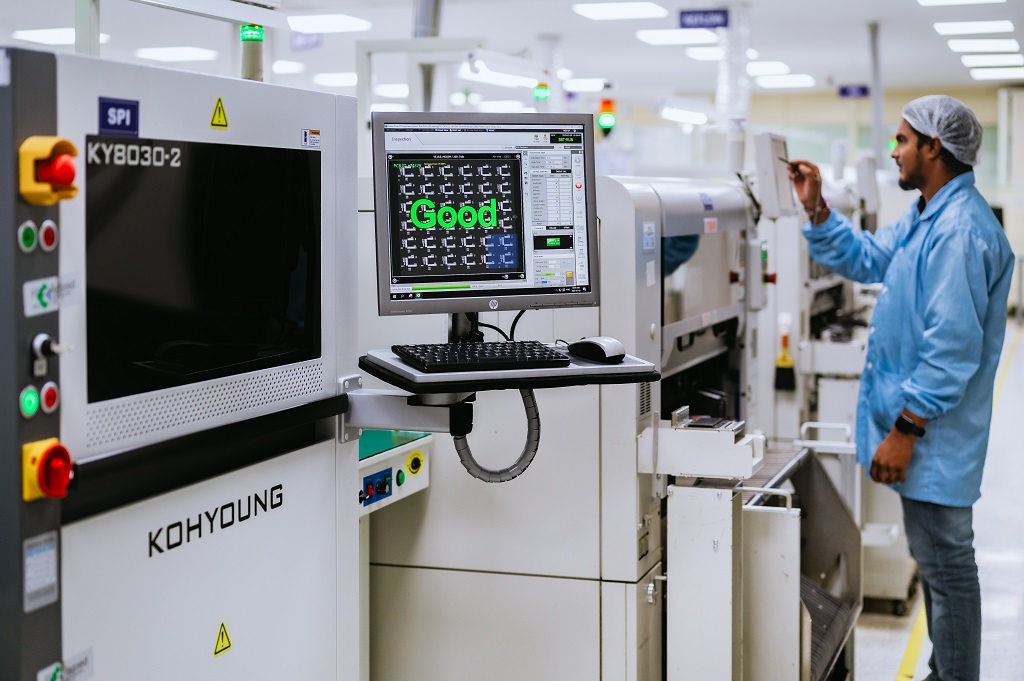
Low-Volume High-Mix (LVHM) EMS: Changeover Discipline & Stable FPY
LVHM EMS fails when changeovers create defects and rework. INDIC treats changeover discipline and stable FPY as the core problem to solve. We front-load DFX/DFT, apply a coverage matrix across ICT/FCT/EOL and boundary-scan/JTAG, and bind evidence to serials in MES. You get fast time to market without trading away yield.
Low-Volume High-Mix (LVHM) EMS: why changeover discipline decides stable FPY
High variants amplify error risk at every hand-off. We control LVHM EMS by enforcing changeover discipline: first-article gates, verified recipe swaps, fixture health checks, and a defect taxonomy that drives fixes. This keeps stable FPY when mix shifts.
Electronic product development & assembly speed—fast time to market without sacrificing reliability
An OEM asked us to ship sooner without sacrificing reliability. INDIC formed an NPI pod (PE/QE/Test/SCM) and ran EVT→DVT→PVT in sprints. We anchored decisions on golden samples and enforced first-article inspection before each scale step. This raised electronic product development assembly speed while protecting yield.
- Parallel bring-up. Cloneable fixtures/recipes let us open a second lane while the first still learned.
- BOM risk map. We pre-approved alternates on long-lead/at-risk parts to protect fast time to market.
- Kitting discipline. Kit-integrity checks at inbound, line-side, and first-article stopped shortages during LVHM changeovers.
- Supplier choreography. Plastics, labels, and pack steps synchronized so build pace didn’t outrun readiness.
DFX/DFT for LVHM: guard-band limits and boundary-scan/JTAG
We front-load DFX/DFT to prevent downstream firefighting: test-point access, stencil/land patterns, heat paths, connector clocking, and bend-radius rules. We apply boundary-scan/JTAG to dense BGA nets and set guard-band limits from a locked golden unit. First-article inspection enforces the plan at each recipe/fixture change.
Complementary test coverage in LVHM: ICT, FCT & EOL with MES traceability
Speed only works when tests close different failure modes. Our coverage matrix maps faults to stations:
- ICT: opens/shorts/values and net integrity.
- Boundary-scan/JTAG: BGA interconnects with limited access.
- FCT: power-up, interfaces, sensors/relays with realistic stimuli.
- EOL: final features and safety; the shipping gate.
We keep MES traceability by writing OBP (firmware version/checksum) and all ICT/FCT/EOL results to the unit serial. No-pass/no-ship prevents undocumented escapes.
Case evidence: fixture alignment → +7% FPY and +8% throughput
A renewable-energy customer saw random functional testing failures, falling first-pass yield, and reduced throughput. INDIC traced the issue to mis-sized guide pins in the fixture.
- Added a pre-centering guide and corrected fixture alignment with the proper pin diameter.
- Verified suppliers and replaced the mis-matched pins across fixtures.
- Re-ran functional testing under the same limits.
Result: FPY +7%, random failures eliminated, throughput+8%. Small mechanical precision moved the needle on LVHM stability.
A single model’s path (so you can picture LVHM control)
- PCBA build: SMT/THT; ICT hits accessible nets; AOI and visual where meaningful.
- Identity: OBP programs firmware and binds version/checksum to MES traceability.
- System proof: FCT exercises I/O and sensors; we tune limits from the golden sample.
- Final gate: EOL verifies features, safety, torque/label/seal; no-pass/no-ship enforces control.
- Pack & trace: Carton/pallet IDs bind to unit history for RMAs and scorecards.
What we need to start—and what you get back
You provide: BOM + AVL, Gerbers/stack-ups, firmware/comm needs, target regulations, environmental constraints, ramp windows, success metrics(yield/OTD).
INDIC returns: a DFX pack, a coverage matrix (ICT vs FCT vs EOL), a capacity ladder(people/fixtures/stations), and a week-by-week NPI plan with gates and artifacts. This shortens the path to fast time to market.
What the buyer felt (measurable outcomes)
- Launches held dates because change control lived inside the NPI pod.
- Stable FPY when mix changed; LVHM EMS kept predictability through complementary coverage.
- Faster audits with MES traceability (OBP →test → pack) tied to serials.
- Lower cost-to-serve from fewer expedites and less rework.
Low Volume High Mix EMS Changeover Discipline & Stable FPY - Bottom Line
Low-volume, high-mix programs succeed when you enforce changeover discipline, design DFX/DFTfor access and limits, apply ICT/FCT/EOLwith boundary-scan/JTAG, and bind everything to MES traceability. INDIC runs this system so you reach fast time to market with stable FPY.

Sign up to read this article